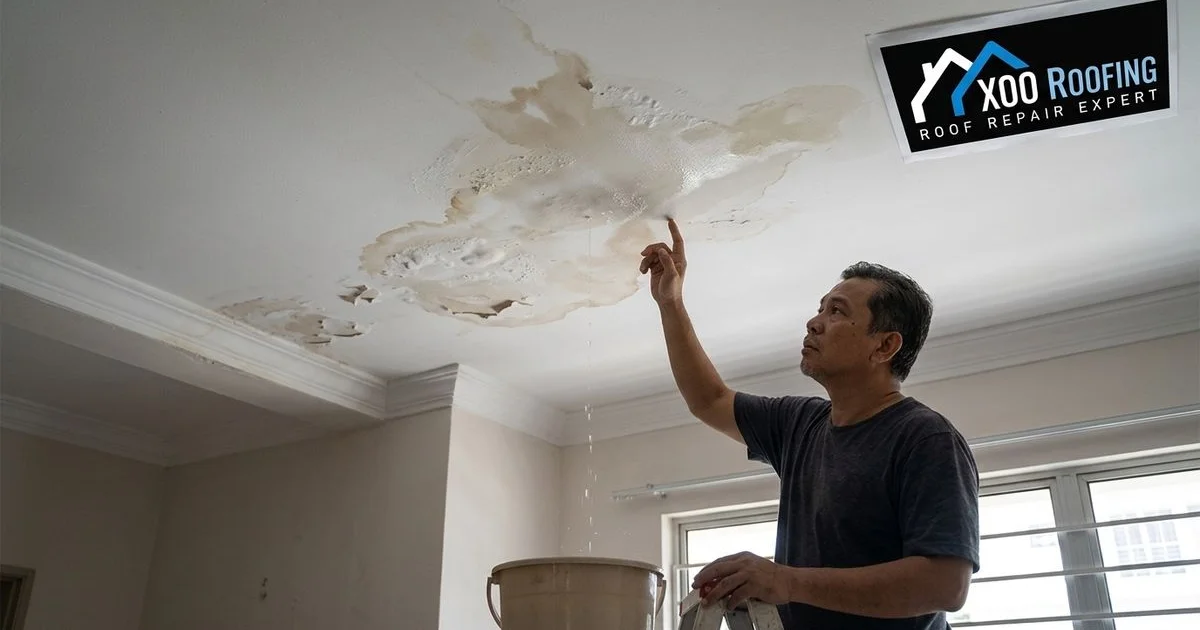
Why Your Roof Only Leaks During Heavy Rain
Discover why some roofs only leak during heavy downpours. Learn about the common causes of intermittent roof leaks and how to fix them before monsoon season.

Hong Seng
Founder & Licensed Roofing Contractor
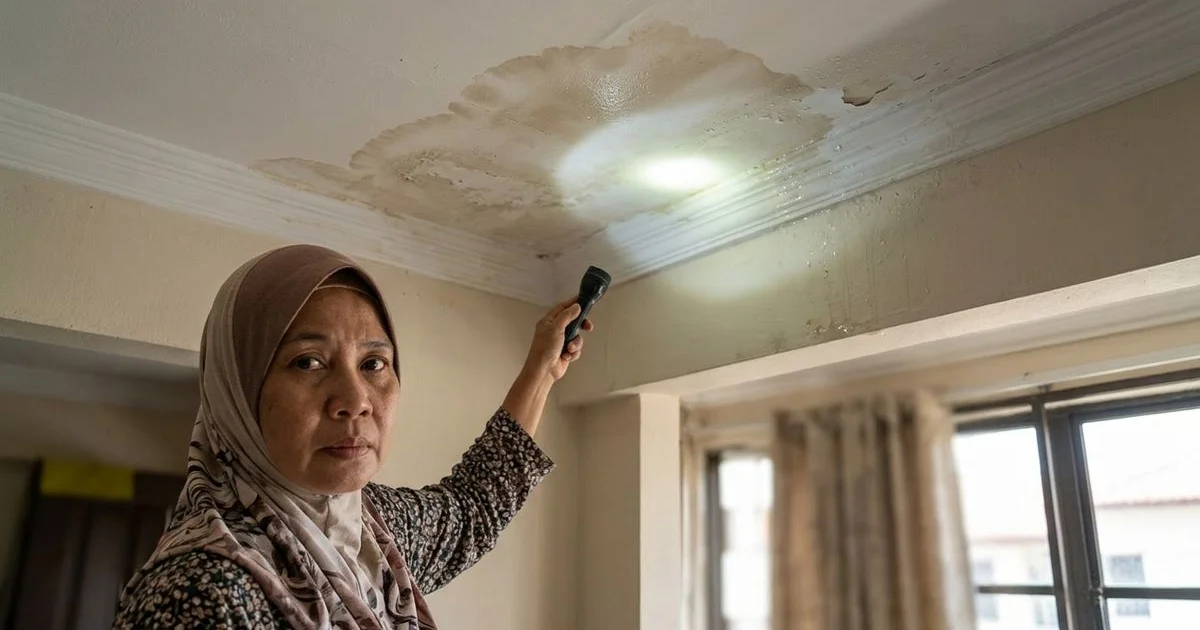
You know how a standard afternoon shower barely registers as a threat, yet a massive 20mm per hour monsoon downpour instantly reveals every hidden flaw above your ceiling. If you are wondering why your roof only leaks during heavy rain, that sudden shift from perfectly dry to actively dripping is a specific structural issue.
Xoo Roofing began as a humble team of five roof specialists in 2015, and having expanded into a leading roofing service provider in the Klang Valley, we see this exact scenario play out constantly.
A light drizzle simply lacks the water pressure needed to exploit tiny weaknesses in the structure.
We know that a torrential downpour, by contrast, forces massive volumes of water against aging seals and microscopic cracks. From what we observe, this overwhelming volume is the dividing line between a functional barrier and an active leak.
Let’s look at the specific failure points that trigger these sudden leaks and walk through the exact solutions our team uses to fix them.
Understanding How Rain Intensity Affects Your Roof
We track local weather patterns closely because the Klang Valley receives an average of 2,400mm of rainfall annually. Your roof is designed to shed water effectively under normal, gentle conditions. Overlapping tiles, intact flashing, and clear gutters easily channel standard runoff away from your foundation.
“A standard Malaysian roof handles vertical rain effortlessly, but an intense 20mm per hour downpour completely changes the physics of water drainage.”
Heavy rain generates significant hydrostatic pressure against the exterior surfaces. The Malaysian Meteorological Department (MetMalaysia) officially issues warnings when rain intensity hits this critical 20mm threshold. This sheer volume of water turns minor flaws into active leaks.
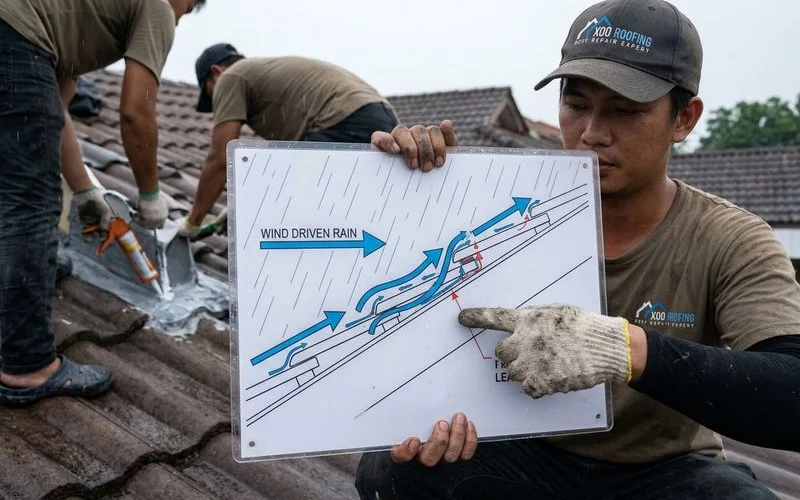
Our experience shows that wind-driven squalls push moisture sideways and upwards into gaps that stay dry during calm weather. High winds force water under the overlaps of standard pitched roofs. The total volume running down the surface quickly overwhelms built-in drainage channels, causing water to pool and penetrate tiny crevices.
Common Reasons Why Your Roof Only Leaks During Heavy Rain
There are specific structural vulnerabilities that remain hidden until severe weather strikes. We categorise these failures based on where the water volume overwhelms the system. Identifying the exact mechanism is the first step toward a permanent repair.
Deteriorated or Displaced Flashing
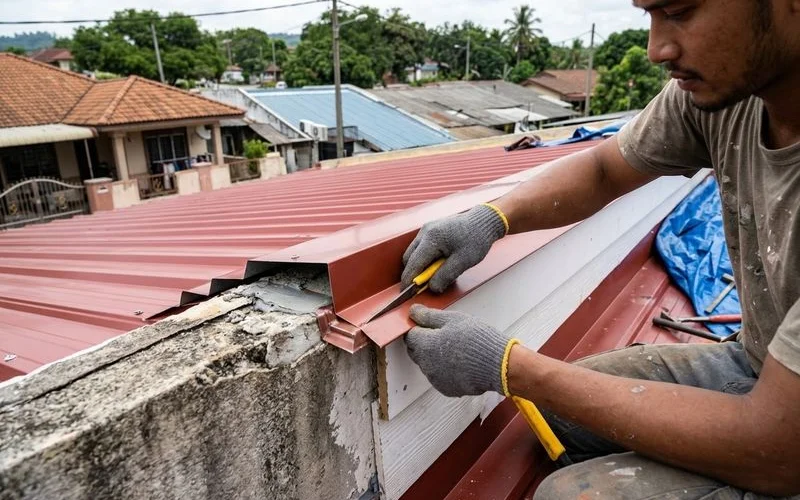
Flashing consists of the metal strips installed at structural joints, valleys, and junctions where the roof meets parapet walls or chimneys. Our technicians frequently find that the intense Malaysian sun causes these metal components to expand and contract dramatically. This constant movement degrades the polyurethane sealant over a typical five-to-seven-year cycle.
Minor sealant gaps remain unproblematic during a light shower because the water flows straight past. A severe storm creates a different scenario entirely.
Heavy rain pools against lifted aluminium or zinc flashing. The massive volume of water overwhelms the compromised seal and pours directly into the underlying battens and ceiling space.
Cracked or Displaced Roof Tiles
We frequently encounter Monier concrete tiles, which are incredibly common across Klang Valley housing developments, suffering from thermal shock. Rapid heating under the afternoon sun followed by an immediate cold downpour causes the concrete to expand and snap. This thermal cycling creates microscopic hairline cracks that remain practically invisible from the ground.
Gentle rain simply runs over these tiny fractures without penetrating the material. Intense storms introduce high water pressure that forces moisture directly through those exact same cracks.
Here are the primary reasons tiles shift and create vulnerable gaps:
- High winds: Strong gusts physically lift and displace the interlocking profiles.
- House settling: Natural soil movement causes the roof trusses to shift slightly over the years.
- Foot traffic: Walking on the roof during antenna or solar panel installations snaps the brittle edges.
Blocked or Overflowing Gutters
Standard Malaysian housing often features 100mm (4-inch) half-round gutters that quickly clog with leaves, dirt, and nesting debris. A partially blocked gutter manages a standard drizzle because the flow rate remains low. A monsoon deluge immediately overwhelms the restricted channel and causes rapid overflow.
Our repair teams often see this overflowing water run backwards under the eaves, soaking the fascia board and flooding the ceiling cavity.
| Gutter Size | Best Suited For | Heavy Rain Capacity |
|---|---|---|
| 100mm (4-inch) Half-Round | Standard light showers | High risk of overflow during monsoons |
| 150mm (6-inch) K-Style | Heavy monsoon zones | Excellent maximum volume handling |
| Custom Box Gutters | Commercial properties | Superior performance for large surface areas |
You must prioritise regular gutter cleaning and maintenance to prevent this specific type of water damage. Upgrading to wider seamless aluminium gutters provides the necessary capacity to handle peak rainfall intensities safely.
Wind-Driven Rain
The inter-monsoon periods around April and October bring sudden squalls that push precipitation horizontally. Wind-driven rain entirely bypasses the standard vertical protection offered by overlapping concrete profiles. Powerful gusts force moisture upwards, driving it straight through ventilation ridges and under the leading edge of the tiles.
We notice that properties on elevated hillsides or corner lots in Subang Jaya and Shah Alam face the highest risk.
A lack of surrounding buildings leaves these homes completely exposed to prevailing storm fronts. The specific orientation of your property dictates which rooms will experience these wind-driven water incursions first.
Valley and Junction Failures
Roof valleys form the V-shaped internal angles where two distinct pitched slopes intersect. These channels act as major funnels, collecting runoff from large surface areas and directing it downward. An enormous volume of water rushes through these specific metal trays during a thunderstorm.
“A restricted valley tray acts like a blocked highway during rush hour, causing a massive backup that spills straight into your ceiling cavity.”
Our inspections routinely reveal valley gutters that are either undersized (less than 300mm wide) or choked with accumulated debris. Water swiftly spills over the elevated sides and floods the underlying timber trusses.
A similar failure occurs at structural junctions where the main pitched surface meets a vertical dormer window or an adjoining wall. The protective mortar or flashing at these joints deteriorates, creating entry points that only fail under extreme volume.
Porous or Saturated Roofing Material
Older roofing materials slowly lose their factory-applied protective layer after years of harsh UV exposure. This degradation turns once-waterproof surfaces into porous sponges that absorb moisture over time. Water easily beads and rolls away during brief, light showers, hiding the underlying issue.
We find that prolonged, intense storms eventually saturate these unprotected concrete tiles completely.
The material reaches maximum absorption capacity, and water begins seeping straight through the body of the tile itself. Applying a high-quality, weather-resistant roof coating, such as Nippon Paint Rooftop PU or a specialised Lumino layer, fully restores the necessary water-repellent properties. This proactive treatment seals the microscopic pores and eliminates saturation leaks.
How to Diagnose the Problem
Tracking down the exact entry point of a volume-dependent issue requires a systematic approach. Water travels unpredictably along beams, insulation, and wiring before finally dropping onto your plaster ceiling. We recommend executing a few specific diagnostic steps to narrow down the source.
Here are the most effective strategies for locating the exact failure point:
- Map the interior drips: Place a bucket exactly where the water falls and measure the distance from two adjacent walls. This precise coordinate helps pinpoint the corresponding exterior location.
- Inspect the attic during a storm: Safely climb into your ceiling space with a bright LED torch while the heavy rain is actively falling. Follow the dark moisture trails along the wooden battens upward to find the primary entry gap.
- Examine the exterior on dry days: Use binoculars from ground level to scan for shifted profiles, cracked mortar joints, or rusted valley trays. Pay special attention to the areas immediately surrounding exhaust pipes and skylights.
- Utilise thermal imaging: A professional roofing contractor will deploy a FLIR thermal camera to detect hidden moisture pockets. This advanced technology identifies temperature differences in the insulation, revealing exact water paths invisible to the naked eye.
Prevention and Solutions
Stopping these sudden incursions requires addressing the root vulnerabilities before the next major storm front arrives. We utilise a combination of structural upgrades and protective treatments to seal the building envelope permanently.
Strategic Pre-Monsoon Maintenance
The most effective defence mechanism against unpredictable weather is a proactive inspection schedule. You should arrange a comprehensive professional assessment annually, ideally between August and September.
This strategic timing provides ample opportunity to replace cracked concrete tiles and reseal aging joints before the heavy October rains commence. Ignoring these minor flaws during the dry season guarantees a major failure when the intense squalls return.
Advanced Waterproofing Applications
Concrete flat sections, balconies, and reinforced concrete (RC) gutters represent massive liabilities during high-volume downpours. A dedicated waterproofing treatment offers a critical secondary barrier against pooling water.
Our application specialists frequently install the following protective barriers:
- Torch-on Bitumen (APP): A thick 3mm or 4mm membrane melted directly onto flat concrete surfaces.
- Polyurethane (PU) Injection: High-pressure chemical grout that actively chases and seals internal structural cracks.
- Liquid-Applied Acrylics: Flexible, UV-resistant coatings painted directly over aging concrete tiles.
These modern chemical barriers withstand extreme hydrostatic pressure and ensure complete watertight integrity.
Gutter Capacity Upgrades
Standard drainage channels simply cannot evacuate the sheer volume of water generated by 325mm/hr rainfall events. If your existing PVC or small half-round channels routinely overflow, a capacity upgrade is mandatory.
We strongly advise installing 150mm (6-inch) seamless aluminium gutters fitted with dedicated debris traps.
Expanding the width of the channels and adding secondary downpipes significantly accelerates the water discharge rate. Properly sized drainage prevents the dangerous backward flow of water into your ceiling cavity.
Modern Flashing Integration
Corroded or improperly seated metal flashing remains a primary culprit for junction leaks. Replacing these deteriorated strips with new, precisely bent materials is the only permanent fix.
We replace failed systems using premium materials that handle extreme thermal expansion.
| Flashing Material | Durability | Best Application |
|---|---|---|
| Standard Zinc | 5-7 years | Budget repairs, temporary fixes |
| Heavy-Gauge Aluminium | 15+ years | Standard residential valleys and junctions |
| Premium Lead | 20+ years | Complex shapes, chimney bases, and tricky corners |
This upgraded combination effortlessly accommodates structural movement while maintaining an impenetrable seal against cascading water. Correctly integrated flashing directs the heavy flow safely back onto the main exterior surface.
Do Not Wait for Monsoon Season
Discovering an active leak at 2:00 AM during a massive November storm is a stressful, expensive scenario. Understanding why your roof only leaks during heavy rain is the first step toward protecting your investment, as emergency call-out rates peak during the monsoon season.
You must take immediate action if your property exhibited any damp patches or active dripping during the last cycle of storms.
Our technicians at Xoo Roofing serve homeowners across Petaling Jaya, Subang, and the wider Klang Valley with targeted, permanent roof leak repair services. Identifying the specific weakness failing under pressure allows the implementation of a proven, weather-tested upgrade.
We will rapidly isolate the failure point and secure your property. Schedule your pre-monsoon assessment today, and ensure your home remains completely dry.
Hong Seng
Founder & Licensed Roofing Contractor
Founder of Xoo Roofing with 10+ years of roofing expertise in Klang Valley.