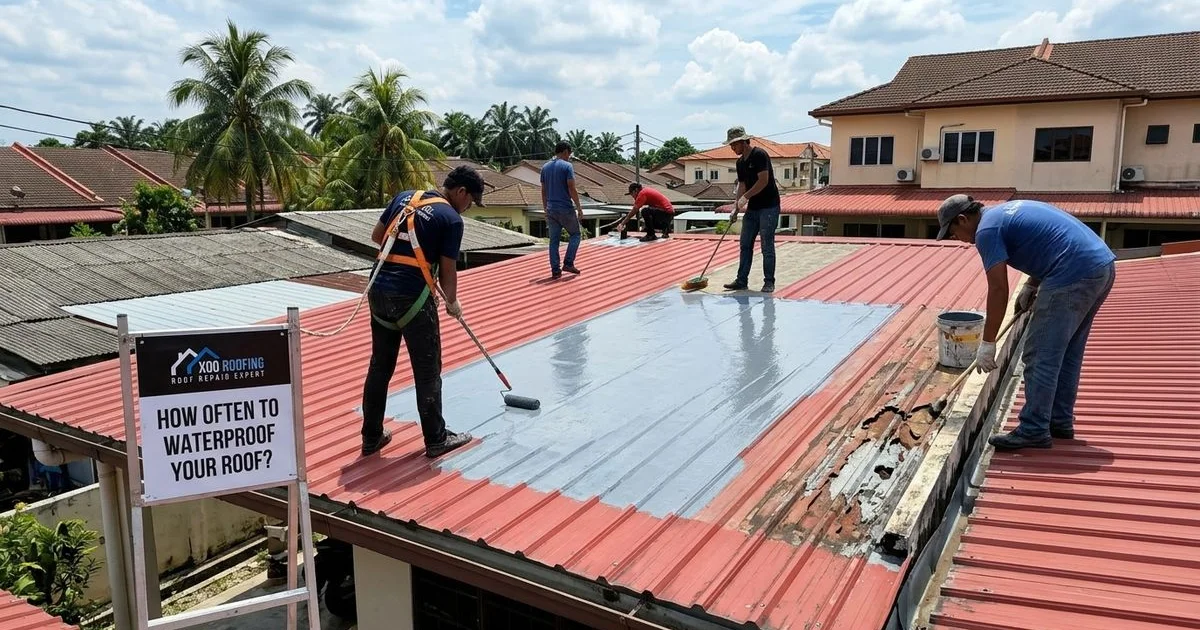
Torch-On vs PU Injection vs Elastomeric Coating
Compare the three most popular waterproofing methods in Malaysia: torch-on membrane, PU injection, and elastomeric coating. Find out which is best for your roof.
Hong Seng
Founder & Licensed Roofing Contractor
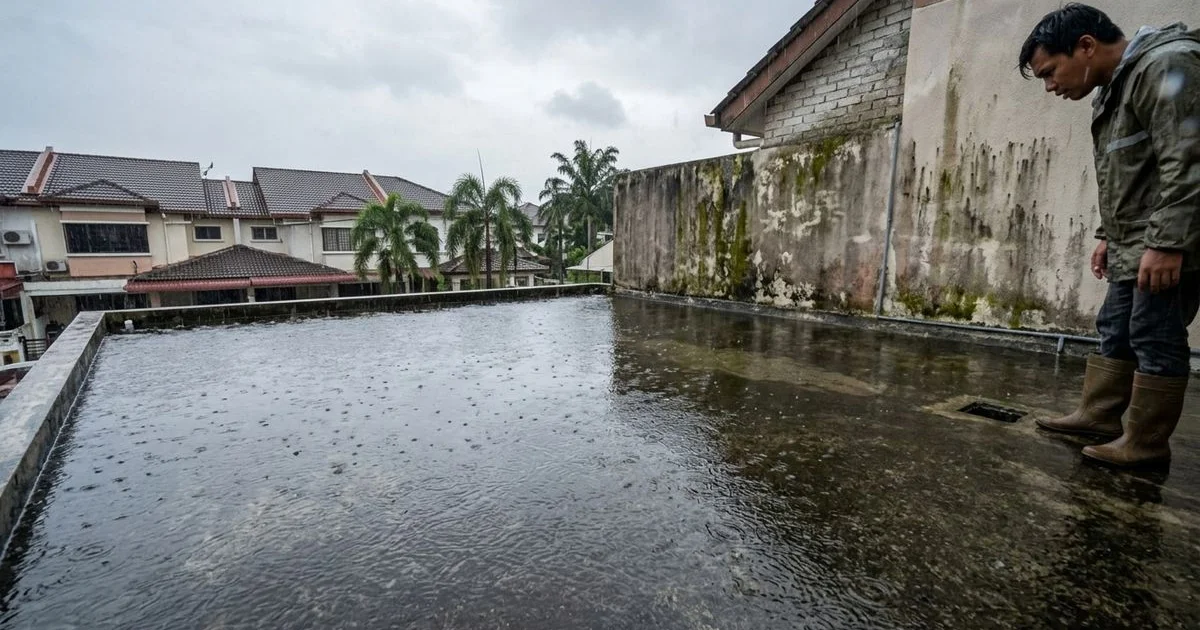
You have probably noticed that Klang Valley rainstorms are becoming more intense every year. Comparing methods like Torch-On vs PU Injection vs Elastomeric Coating is essential to finding a proper roof waterproofing system that prevents severe structural damage.
We have watched the Department of Statistics Malaysia (DOSM) report a sharp spike to 1,345 flood incidents nationwide in 2024. This data proves that standard drainage is no longer enough to keep moisture out of aging concrete. That reality makes choosing the correct surface barrier a critical financial decision for long-term property maintenance.
Let’s explore the three main methods used locally and walk through the exact situations where each one shines.
Torch-On Membrane Waterproofing
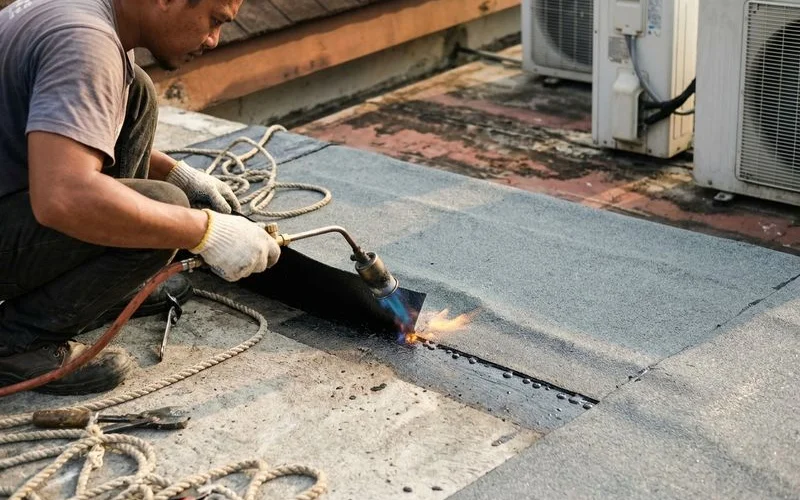
Our team at Xoo Roofing began as a humble group of five specialists in 2015, and the company has steadily expanded into a recognized leading service provider in the Klang Valley by mastering techniques like this one. Torch-on membrane, also known as Atactic Polypropylene (APP) modified bitumen, is a heavyweight champion for flat concrete roofs. Contractors apply sheets of this thick material directly to the surface using a gas torch.
How It Works
We always begin the process with thorough surface preparation. The existing concrete must be clean, dry, and completely free of loose debris. A layer of bitumen primer is applied to improve adhesion before rolling out the membrane.
The heat from the gas torch melts the underside of the sheet. This creates a continuous waterproof barrier that bonds firmly to the substrate and adjacent rolls.
Advantages
- Proven track record. Materials like Obaproof TO-1000 have been used successfully in Malaysia for decades.
- Excellent durability. A properly installed 4mm thick membrane can last 15 to 20 years.
- UV resistance. The mineral finish on the top surface provides strong protection against intense sun degradation.
- Seamless coverage. Heat-bonding creates fused joints between sheets to eliminate seepage risks.
Disadvantages
- Requires skilled application. Working with an open flame demands training to avoid poor bonding or fire risks.
- Surface preparation is critical. Cracks or trapped moisture in the substrate will cause the membrane to fail prematurely.
- Difficult to repair. Patching a specific leak requires cutting out the damaged section and welding in a new piece.
- Heat application limits. Using a gas torch requires strict precautions near timber structures or flammable insulation.
Best Suited For
Our specialists strictly reserve this method for areas that can support heavy-duty materials.
- Flat concrete roofs (RC slabs)
- Roof terraces and balconies
- Commercial building rooftops
- Areas that receive heavy foot traffic
Cost Range
Expect to pay RM 18 to RM 35 per square foot. Pricing depends heavily on whether you choose a standard 3mm or a heavy-duty 4mm membrane. The installation always includes a strict 24 to 48-hour water ponding test before sign-off to ensure total structural integrity.
Polyurethane (PU) Injection
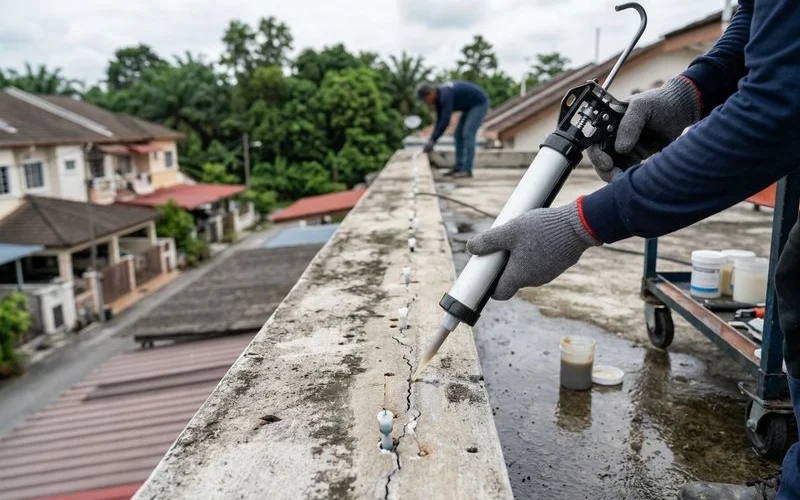
Our technicians utilize this precise approach to fix hidden issues without hacking away existing tiles or finishes. PU injection serves as a highly specialized technique used primarily to treat existing leaks in concrete structures. Rather than coating the entire surface, this method targets the exact cracks where water enters.
How It Works
The process starts by drilling injection holes at a 45-degree angle to intersect the crack at its midpoint. Mechanical packers are then fitted tightly into these holes. High-pressure grouting machines pump polyurethane resin into the concrete at pressures ranging from 200 psi to 2500 psi.
We prefer using hydrophilic resins like Pentens PU-300 for active leaks. These specific materials react instantly upon contact with water inside the void. The liquid rapidly expands into a flexible foam that completely seals the structural gap.
Advantages
- Targeted repair. The high-pressure injection fills the precise point of water entry.
- No surface disruption. You avoid removing expensive floor finishes since the treatment occurs within the concrete.
- Flexible seal. The cured foam accommodates minor thermal expansion and structural movement.
- Quick application. Most straightforward leak repairs take less than a day to complete.
Disadvantages
- Not a surface solution. It treats specific gaps but does not provide broad waterproof coverage.
- Requires accurate diagnosis. Pumping resin into the wrong location simply diverts the water to another weak point.
- Specialized equipment needed. Handling a 2500 psi machine requires professional contractors rather than general handymen.
- Limited dry effectiveness. Hydrophilic resins require the presence of water to trigger their expansion properly.
Best Suited For
Our crews deploy this expanding foam strategy for very specific structural failures.
- Active leaks through concrete cracks
- Water seepage through RC slab roofs
- Leaks in basements and retaining walls
- Situations where surface access is limited or impractical
Cost Range
Rates range from RM 100 to RM 300 per injection point. A typical flat roof leak repair requires 5 to 15 packers, bringing the total cost to RM 500 to RM 4,500. We consider this the most cost-effective way to stop active water intrusion without major renovation work.
Elastomeric Coating
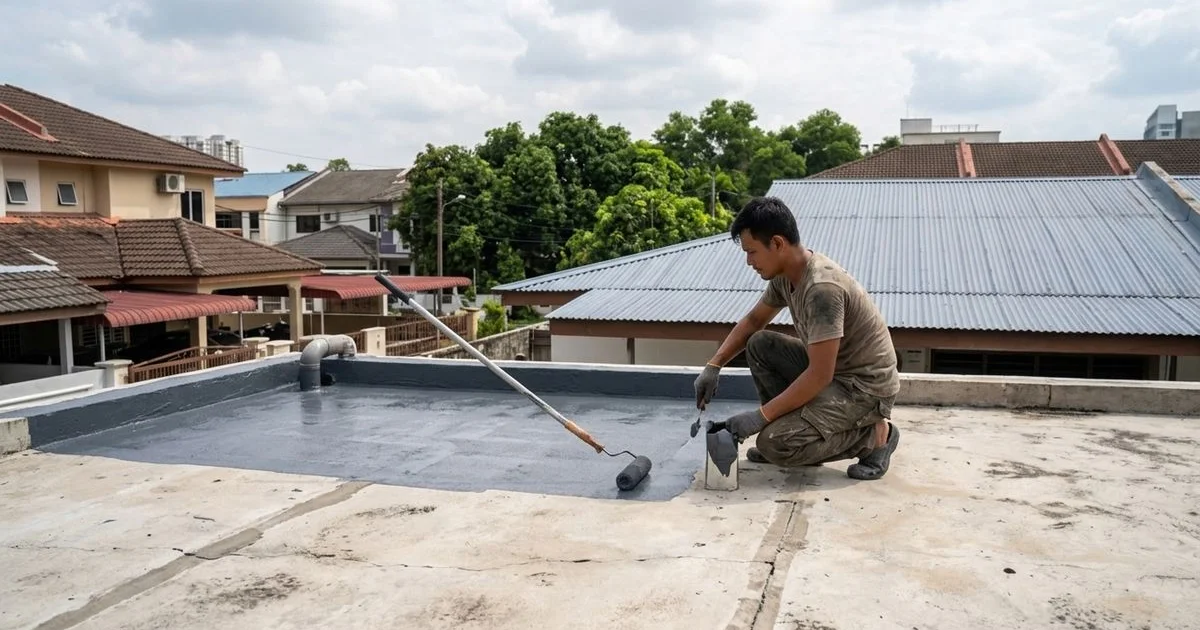
Elastomeric coating involves applying a flexible, rubber-like liquid directly onto the roof surface. When fully cured, this material forms a seamless membrane that stretches and contracts with the building. Our teams frequently apply this solution to roofs with good existing drainage.
How It Works
The application begins with a deep cleaning of the substrate. A dedicated primer coat goes down first, followed by multiple layers of the liquid acrylic or polyurethane hybrid. Contractors use a roller, brush, or airless sprayer to build up the necessary thickness.
We embed a fiberglass mesh between the layers in high-stress areas like corners and pipe penetrations. This added reinforcement prevents the coating from tearing under structural shifts. High-quality products from brands like Nippon Paint or Dulux are widely available in the local market.
Advantages
- Easy application. Liquid formats easily cover complex shapes and penetrations without cutting or welding.
- Seamless finish. Curing in place means absolutely no joints or seams for water to exploit.
- Heat reflection. Premium white coatings boast a high Solar Reflectance Index (SRI) that can reduce roof surface temperatures by up to 15 degrees Celsius.
- Crack-bridging ability. Top-tier acrylic polymers stretch up to 300 percent to bridge hairline concrete cracks.
Disadvantages
- Shorter lifespan. Most applications last 5 to 10 years before requiring a fresh topcoat.
- Vulnerable to ponding. Prolonged exposure to standing water will cause the acrylic to soften and blister.
- Quality varies. Cheaper variants degrade rapidly, requiring you to insist on established commercial brands.
- Preparation dependence. Applying liquid rubber over dirt or dampness guarantees premature peeling.
Best Suited For
This liquid system adapts brilliantly to various residential needs. Our clients appreciate how easily it covers complex structures without leaving vulnerable seams.
- Flat roofs with good drainage
- Car porch waterproofing projects
- Roof surfaces where heat reflection is desired
- Maintenance recoating of previously waterproofed surfaces
- Complex roof shapes with many penetrations
Cost Range
Expect costs between RM 8 and RM 20 per square foot. The final rate depends on the specific polymer blend and the number of coats required. We always suggest investing in a UV-resistant option to gain long-term value through lower daily air conditioning costs.
Comparison Summary: Torch-On vs PU Injection vs Elastomeric Coating
Side-by-side data provides the clearest path to making an informed decision. This quick reference table highlights the key differences between the three major approaches. Review the metrics below to match a system to your exact property needs.
| Factor | Torch-On Membrane (APP) | PU Injection (Hydrophilic) | Elastomeric Coating (Acrylic) |
|---|---|---|---|
| Application type | Sheet membrane (3mm/4mm) | Targeted 2500 psi injection | Liquid polymer coating |
| Best for | Flat roofs, terraces | Specific active leak points | Flat roofs, car porches |
| Expected Lifespan | 15 - 20 years | 5 - 15 years | 5 - 10 years |
| Cost Range | RM 18 - RM 35 per sq ft | RM 100 - RM 300 per point | RM 8 - RM 20 per sq ft |
| UV Resistance | Strong (Mineral finish) | N/A (Internal concrete) | Excellent (UV-rated formulas) |
| Heat Reflection | Low | N/A | High (Lowers temp up to 15°C) |
| Core Advantage | Heavy-duty durability | Fixes leaks without hacking | Energy efficient cooling |
Which Method Should You Choose?
The correct fix depends entirely on the current state of your concrete slab. Choose torch-on membrane for long-lasting, heavy-duty protection on high-traffic flat roofs. We highly recommend PU injection if you have an active drip and cannot disturb the tiled surface above.
Select an elastomeric coating if you prioritize affordable maintenance and lower indoor temperatures. Combining methods often yields the strongest defense against monsoon rains. For example, injecting expanding foam stops the immediate leak before rolling a reflective liquid barrier over the entire deck.
Get Expert Advice
We have spent years mastering all three of these applications to serve homeowners across Petaling Jaya and the Klang Valley. A proper inspection will reveal the exact cause of your structural damage.
Reach out for a professional roof waterproofing consultation today to secure your property. We can help you finalize the choice between Torch-On vs PU Injection vs Elastomeric Coating based on your exact needs.
Hong Seng
Founder & Licensed Roofing Contractor
Founder of Xoo Roofing with 10+ years of roofing expertise in Klang Valley.