
Annual Roof Maintenance Checklist
Complete annual roof maintenance checklist for Malaysian homeowners. Step-by-step inspections, seasonal timing, and what to look for to keep your roof in top condition.

Mei Ling Tan
Senior Roofing Consultant
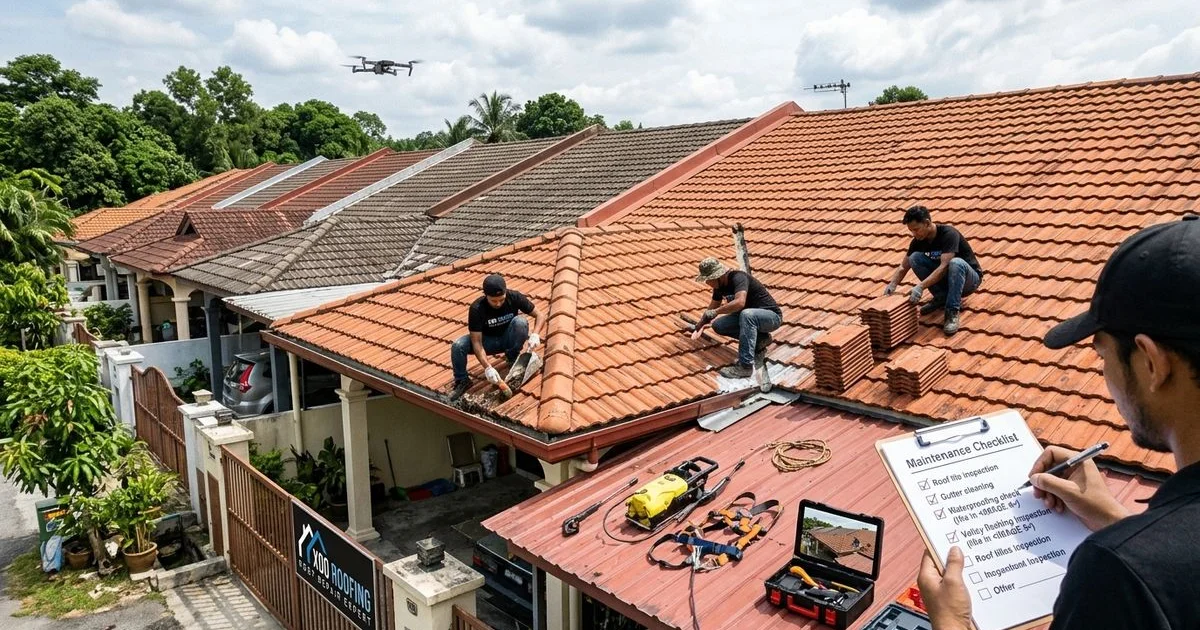
Since starting Xoo Roofing as a small team in 2015, we have seen exactly what happens when basic upkeep is ignored. Homeowners often call us in a panic over sudden ceiling leaks. They usually assume their roof is fine simply because it looks intact from the driveway.
The reality is quite different here in the Klang Valley. Our local weather data shows we receive over 2,600 mm of rain annually.
That intense volume of water quickly turns a minor tile crack into a major structural problem.
This is why following a proper Annual Roof Maintenance Checklist is essential. We will walk through exactly what you need to inspect, including:
- High-risk exterior failure points
- Hidden interior moisture signs
- Strategic repair timelines
The goal here is to help you spot small defects before they escalate into expensive emergency repairs.
When to Schedule Your Annual Inspection
Timing your evaluation correctly saves you from battling active weather. The ideal window for your primary inspection in Malaysia is September to October. This period sits right before the heavy Northeast Monsoon season hits in November.
You want enough lead time to arrange repairs if you find broken components. Contractors get extremely busy once the daily downpours start.
We recommend adding a secondary check around March or April. This post-monsoon assessment reveals any hidden wear from the wet months. Identifying a displaced tile immediately after the storms is much cheaper than waiting a full year.
The Exterior Roof Checklist
1. Roof Tiles and Covering
Using a pair of binoculars from the ground is the safest way to start. Scan the surface systematically, looking for these specific warning signs:

- Missing components: Any gap in your coverage is a direct leak risk. Water will immediately enter the underlying timber structure.
- Cracked materials: Hairline fractures leak during heavy monsoon downpours. A single tile replacement might cost RM 50, but ignoring it can necessitate a full replacement later, which averages RM 12,000 to RM 16,000 for a standard terrace house.
- Moss and algae: Significant organic growth traps moisture against the surface. Scheduling professional roof cleaning strips this damaging layer away.
- Faded coatings: Concrete profiles like Monier Elabana are built to last 50 years, but their protective glaze degrades under constant UV exposure. Porous tiles absorb rain instead of shedding it.
2. Ridge Caps and Hip Tiles
The mortar holding your top ridge and hip lines takes the brunt of daily temperature shifts. This constant expansion and contraction under the Malaysian sun causes the cement mixture to crack over time.
You need to verify that these crucial joints remain watertight. Check the entire peak for:
- Shifted or tilted ridge caps
- Missing chunks of cement mortar
- Daylight showing between the capping and the flat tiles below
3. Flashing
Metal flashing seals the awkward joints around walls, chimneys, and skylights. We frequently see leaks originating here rather than from the main tiles. The extreme heat dries out the polyurethane sealants used around these edges.
Inspect all metal transitions carefully. Pay close attention to:
- Lifted edges pulling away from brickwork
- Rust spots on older zinc or aluminium sheets
- Dried, brittle sealant that has lost its elasticity
4. Gutters and Downpipes
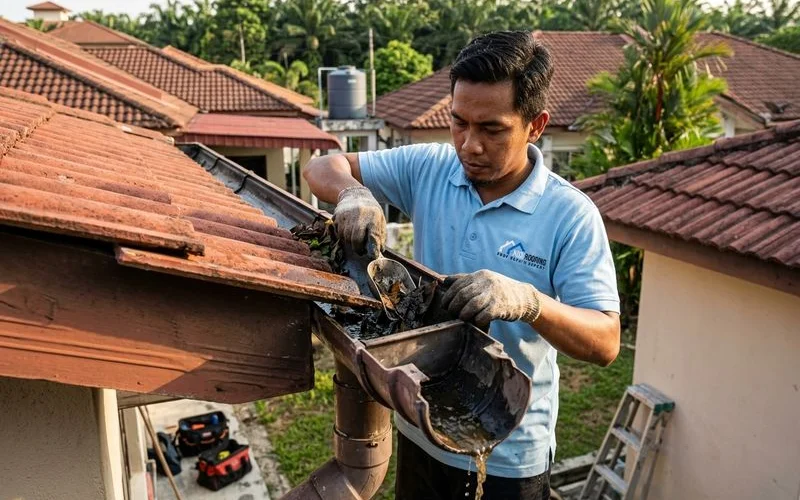
Your rainwater drainage system handles a massive volume of water during a storm. Standard uPVC gutters are especially prone to warping under tropical heat, which ruins their precise slope.
We advise clearing out the channels completely before running a water test. Stagnant water causes overflows and creates perfect breeding grounds for Aedes mosquitoes.
Key drainage checks include:
- Slope alignment: Water must flow smoothly in the direction of the outlets without pooling.
- Joint integrity: Run a hose through the system to expose dripping connections.
- Bracket security: Heavy debris snaps the plastic brackets holding the channel to the fascia.
- Clear downpipes: Blockages push water back up under the roofline.
Read our complete guide on how often to clean gutters in Malaysia for specific clearing techniques.
5. Fascia and Soffit Boards
The fascia boards supporting your gutters and the soffits underneath the overhang are prime targets for water damage and wildlife. Long-tailed macaques and civet cats (musangs) frequently exploit soft, rotted wood to enter the ceiling space.
You should poke the timber panels firmly with a screwdriver to test their strength. Look out for:
- Peeling or bubbling paint indicating moisture behind the surface
- Spongy wood sections that require replacing
- Gnaw marks, animal droppings, or widened entry holes
6. Vents and Openings
Exhaust outlets and ventilation gaps require secure covers. We always check the condition of the wire mesh during our inspections. Damaged screens provide an open door for flying termite (anai-anai) swarms to nest in your dry timber battens.
Make sure every vent cover is firmly attached. The sealant around the base of any protruding pipe must remain pliable and crack-free.
The Interior Checklist
7. Attic or Ceiling Space Inspection
Climbing into your ceiling space offers the clearest evidence of hidden defects. We find that minor external cracks often show up as distinct dark watermarks on the interior timber trusses long before they drip onto your floor.
Use a bright torch to inspect the structural framework. Focus your attention on:
- Timber stains: Yellow or brown patches on rafters indicate active moisture penetration.
- Light leaks: Any daylight shining through the tile gaps means rain will follow the same path.
- Insulation damage: Wet fibreglass or rockwool insulation compresses and loses its heat-blocking properties entirely.
- Termite activity: Mud tubes travelling up the wooden battens require immediate pest control intervention.
8. Interior Ceilings and Walls
Water travels along beams before dropping, so a stain in your bedroom might originate from a leak meters away. We always tell clients to look up frequently during the rainy season.
Walk through every room and scan the plasterboard. Warning signs include:
- Fresh yellowish-brown rings expanding on the flat ceiling
- Paint bubbling or flaking off the upper walls (efflorescence)
- Persistent damp odours in closed upstairs rooms
- Sagging plasterboard sections that may collapse under water weight
Flat Roof Areas
9. Flat Roof Surface
Concrete car porches and open terraces face direct solar radiation. The intense surface temperatures cause standard liquid polyurethane (PU) waterproofing membranes to blister and peel over time.
We consider standing water the biggest enemy of a flat concrete slab. Puddles that remain 24 hours after a storm will slowly degrade the protective layers.
Evaluate these specific areas:
- Ponding zones: Mark areas where water fails to reach the floor traps.
- Membrane health: Look for chalky surfaces, blistering, or flaking topcoats.
- Drainage traps: Remove all leaves and silt blocking the outlet covers.
- Wall junctions: Check the upward flashing where the flat slab meets the vertical house wall.
Our detailed breakdown on how often to waterproof your roof offers specific timelines for recoating these vulnerable areas.
Prioritising Maintenance Actions
Categorising your findings helps manage repair budgets effectively. We use a structured timeline to prevent minor issues from escalating.
Use this framework to plan your next steps:
| Urgency Level | Required Action Frame | Examples of Defects | Estimated Impact if Ignored |
|---|---|---|---|
| Urgent | Do Immediately | Missing tiles, active ceiling leaks, blocked flat roof drains | Severe structural rot, collapsed ceilings |
| High Priority | Schedule Within a Month | Hairline cracked tiles, loose flashing, gutter slope issues | Localised water damage during next storm |
| Medium Priority | Plan for This Year | Moss treatments, minor waterproofing wear, tree trimming | Accelerated material degradation |
| Long-Term | Budget for Future | Full roof replacement, upgrading to metal gutters | Property devaluation, ongoing patch-repair costs |
This structured approach keeps your property safe without overwhelming your finances.
Creating a Maintenance Record
Documenting your yearly checks is just as vital as performing them. We highly recommend setting up a dedicated digital folder or using an app like Google Keep to store your notes.
This historical data proves invaluable when dealing with insurance companies. A clear log of dates, findings, and completed repairs demonstrates that you have not neglected the property.
Your basic record should include:
- The exact date of the inspection
- Clear photos of any suspicious cracks or stains
- Receipts for any professional work completed
- A reminder for the next scheduled check
Professional vs DIY Inspections
Handling basic visual checks from the ground is perfectly safe for any homeowner. Getting up onto a two-storey pitch, however, introduces serious fall hazards.
Wet algae makes clay and concrete surfaces as slippery as ice.
We utilise proper safety harnesses and even drone technology to assess hard-to-reach peaks safely. Experienced technicians provide benefits that go beyond simple observation:
- Safe access to steep or fragile surface areas
- Early detection of subtle mortar failures
- Accurate repair estimates based on current Malaysian material costs
- Official condition reports for insurance claims
Invest in Prevention
Proactive care is the most effective way to protect your property investment. The modest cost of an annual check is practically invisible compared to a RM 15,000 structural rebuild.
We want you to feel completely confident when the next monsoon hits. Contact Xoo Roofing today to book your comprehensive Annual Roof Maintenance Checklist evaluation.
Whether you require a simple condition report, specialised roof cleaning and coating, or complete gutter maintenance, our specialists are ready to help. Protect your home and keep your covering in peak condition year after year.
Mei Ling Tan
Senior Roofing Consultant
Senior consultant specialising in waterproofing and preventive roof maintenance.