How Often Should You Waterproof Your Roof?
Learn how often you should waterproof your roof in Malaysia. Understand the lifespan of different waterproofing systems and when to schedule recoating.

Mei Ling Tan
Senior Roofing Consultant
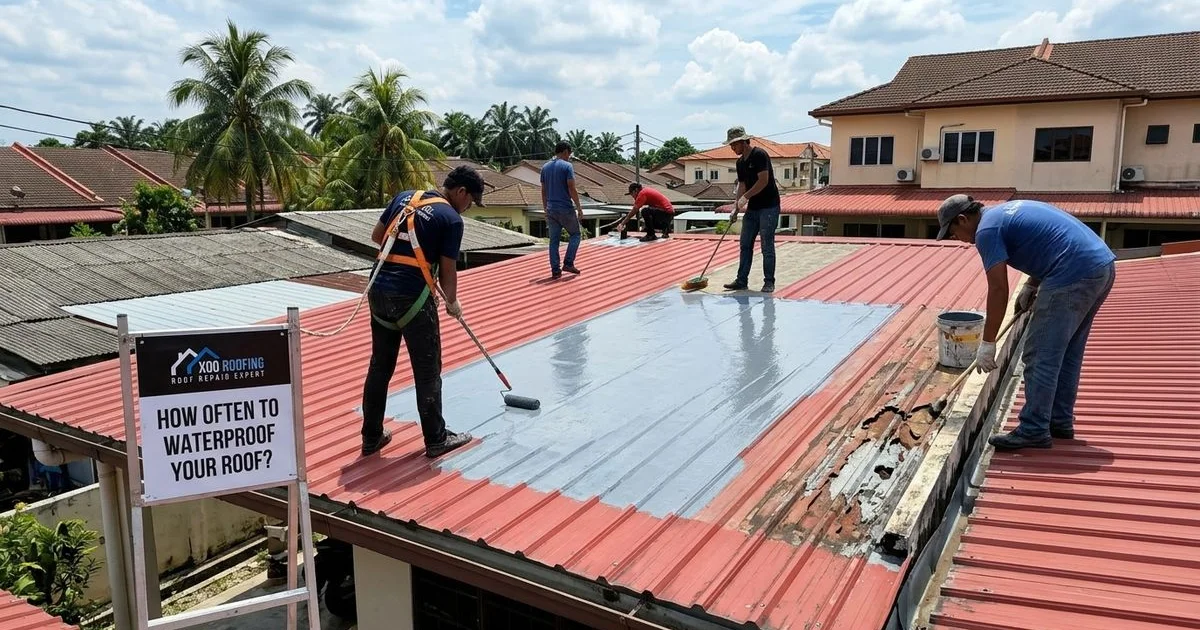
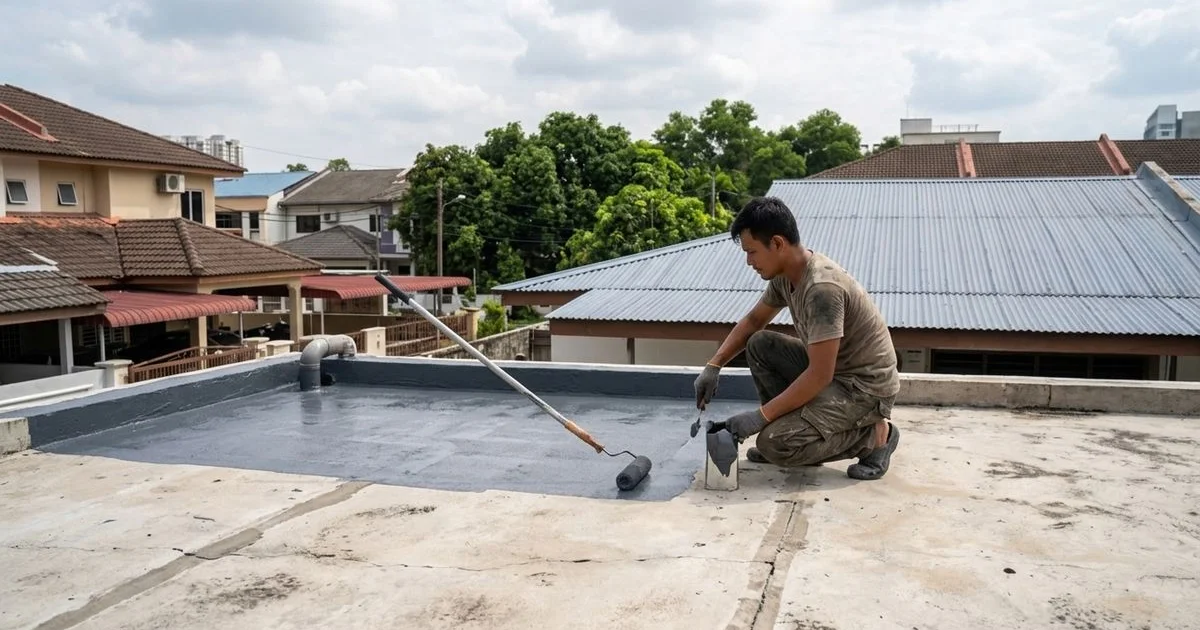
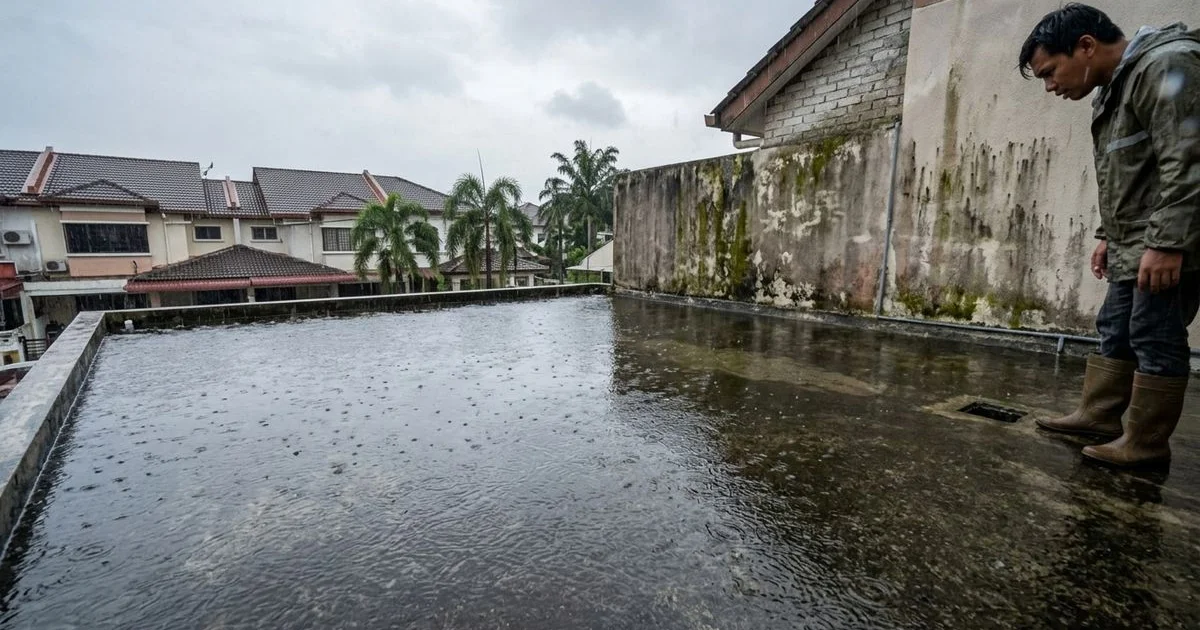
You know how punishing the weather can be on building materials in this region. The constant cycle of blistering heat and torrential rain prompts a critical question from homeowners, which is how often should you waterproof your roof? Answering this correctly separates a well-maintained property from one plagued by severe structural damage.
The Klang Valley receives roughly 2,500 mm of rainfall annually, with November alone dumping over 340 mm on average, making proactive maintenance essential.
This extreme weather exploits even the smallest weakness in a protective coating. Let us look at the data, what it actually means for your specific flat slab or pitched structure, and explore a practical maintenance schedule.
Waterproofing Lifespan by System Type
Different methods yield dramatically different lifespans. We will examine the most common materials used across Malaysia and what the data says about their durability.
Torch-On Membrane
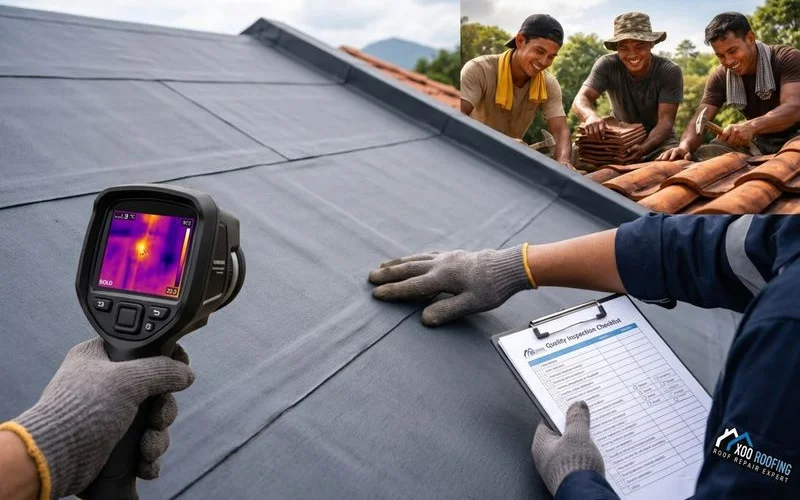
Modified bituminous torch-on membranes are among the longest-lasting options available for flat concrete slabs. A high-quality 4mm thick membrane from reputable brands like Bostik or Penetron provides reliable protection for 15 to 20 years.
We highly recommend these reinforced systems because they handle the structural expansion and contraction of concrete exceptionally well. The thick polyester core prevents tearing during intense temperature fluctuations.
Our application teams always ensure proper overlapping and torching at the seams. This precision keeps water from seeping through the vulnerable joints.
Elastomeric Coating
Liquid coatings offer a shorter lifespan than torch-on rolls but present a more affordable maintenance path. Standard acrylic coatings last 5 to 8 years, while premium silicone elastomeric products perform well for 10 to 15 years.
Our preferred approach for flat roofs is using silicone-based elastomeric coatings. Silicone resists pooling water far better than standard acrylics.
We find that the straightforward recoating process saves property owners significant labor costs. The benefits of this system include:
- Direct application over the existing cleaned coat
- High resistance to ponding water
- Excellent UV reflectivity to lower cooling costs
Cementitious Waterproofing
Cement-based mixtures are rigid and primarily serve as an under-tile waterproof layer. They meet strict local MS 1294 building standards for internal wet areas like bathrooms and covered balconies.
We advise against using cementitious products on fully exposed main roofs. The material lacks flexibility and will crack as the building shifts. Temperatures in Malaysia swing from 33 degrees Celsius in the afternoon to 24 degrees at night, causing massive thermal movement.
Polyurethane (PU) Coating
PU liquid membranes offer a fantastic balance of high elasticity and durability. These tough coatings stretch to bridge hairline cracks as the building settles, typically lasting 8 to 12 years.
We always specify an aliphatic UV-protective topcoat when applying PU systems outdoors. This top layer prevents common degradation issues such as:
- Rapid yellowing of the membrane
- Surface chalking and powdering
- Loss of elasticity from intense sun exposure
Acrylic Waterproofing
Acrylic is the most budget-friendly choice, but it also has the shortest functional life of 3 to 5 years. It degrades quickly under constant tropical sun exposure.
Our strict rule is to never use acrylic coatings on flat surfaces where water collects. It breaks down and re-emulsifies if submerged for more than 48 hours. You should only apply it to properly sloped roofs with rapid drainage.
Factors That Affect Waterproofing Lifespan
The baseline numbers above are just guidelines. Real-world conditions dictate the actual longevity of your investment.
Intense UV Exposure
The UV index in Malaysia regularly hits extreme levels of 10 or higher. This intense radiation bakes the chemical binders out of liquid coatings.
We solve this by applying white or light-coloured reflective finishes. A white roof provides several physical advantages, including:
- Absorbing significantly less thermal energy
- Physically lowering the surface temperature of the slab
- Slowing down the material degradation process
Regular Foot Traffic
Accessing your roof to service HVAC compressors or clean solar panels creates mechanical wear. The friction grinds down the protective layer over time.
Our commercial clients often install designated EPDM walkway pads. These durable rubber mats take the brunt of the foot traffic and leave the primary membrane untouched.
Persistent Water Ponding
Standing water accelerates the chemical breakdown of almost any sealant. The industry defines ponding as water that remains on the surface for more than 48 hours after a rainstorm.
We correct this issue by adjusting the concrete screed to a minimum 1:60 gradient. Proper slopes ensure gravity pulls the water toward the drainage pipes immediately.
Quality of Installation
Even the most expensive silicone coating fails if it goes over a dirty substrate. Proper surface preparation accounts for the majority of a successful application.
Our crews use 2,000 PSI high-pressure washers to strip away algae, dirt, and flaking paint. A pristine surface is required to achieve a permanent chemical bond. The essential preparation steps include:
- High-pressure washing at a minimum of 2,000 PSI
- Applying a compatible primer to the porous concrete
- Allowing adequate curing time before applying the topcoat
Harsh Environmental Conditions
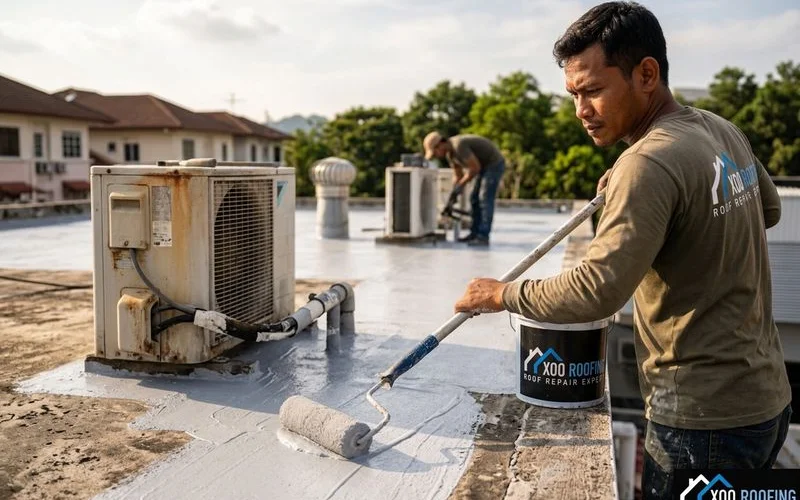
Properties in the Klang Valley deal with urban pollution that creates slightly acidic rain. Homes near the coast face corrosive salt-laden air.
We use specialized chemical-resistant coatings for properties in heavy industrial zones. These upgraded materials fight off atmospheric pollutants that would easily eat through standard residential sealants.
Signs Your Waterproofing Needs Renewal
Rather than guessing based on age, you should look for specific physical indicators. These warning signs tell you the protective barrier is failing.
- Visible chalking on the surface: Swipe your bare hand across the coating. A powdery residue means the UV rays have destroyed the chemical binder.
- Bubbling or blistering areas: Moisture trapped under the membrane expands in the midday heat, lifting the material away from the concrete.
- Cracking around penetrations: Shrinkage around PVC vent pipes and skylights creates immediate entry points for rainwater.
- Interior ceiling stains: Yellow or brown water rings on your indoor plasterboard indicate a leak that has been active for weeks.
- Spalling concrete slabs: If you see exposed, rusted steel rebar on the underside of your balcony, the waterproofing has completely failed.
Recommended Maintenance Schedule
Proactive timing prevents emergency repairs. We base this schedule on the distinct weather patterns of the Klang Valley.
- Annually in September: Inspect the entire roof right before the November monsoon season begins. Clear all leaves from the gutters and drainage scuppers.
- Every 3 to 5 years: Hire a waterproofing specialist to conduct a formal assessment. They will touch up high-wear areas and seal minor cracks.
- At the end of the system lifespan: Plan for a complete recoating or membrane replacement. Address all minor concrete repairs before applying the new layer.
The Cost of Neglecting Maintenance
Delaying maintenance to save cash is a dangerous gamble. Water intrusion causes severe secondary damage to the entire building structure.
We regularly see the financial fallout of delayed intervention. A standard preventative recoat typically costs between RM 3,000 and RM 5,000. This relatively small investment secures the entire upper envelope of the house.
Our data shows that ignoring the problem leads to concrete spalling, rusted rebar, and ruined interior ceilings. Fixing those structural failures easily pushes the repair bill between RM 15,000 and RM 30,000.
| Maintenance Approach | Typical Action Required | Estimated Cost (RM) |
|---|---|---|
| Proactive Care | Annual clearing and minor sealant touch-ups | 500 - 1,500 |
| Scheduled Renewal | Full elastomeric recoating over a clean surface | 3,000 - 5,000 |
| Reactive Repair | Hacking slab, fixing rebar, and full replacement | 15,000 - 30,000+ |
Creating Your Waterproofing Maintenance Plan
A documented strategy keeps your property safe and predictable. Follow these specific steps to take control of your roof health.
- Identify the specific material. Determine exactly what is on your roof right now, whether it is a PU coating or a torch-on membrane.
- Review the warranty conditions. Many 10-year product warranties require you to perform and document annual visual inspections.
- Set a pre-monsoon calendar reminder. Schedule your visual check every September to prepare for the heaviest rains of the year.
- Budget for the system lifecycle. Set aside repair funds early based on the expected 5, 10, or 20-year lifespan of your specific coating.
- Document all interventions. Keep a detailed log of patch jobs, contractor visits, and photographs for future reference.
Professional Assessment: How Often Should You Waterproof Your Roof?
Guessing the condition of your roof is highly risky. A professional evaluation provides exact data on the remaining life of your protective coatings.
Xoo Roofing began as a humble team of five roof specialists in 2015 and has steadily expanded into a recognized leading roofing service provider in the Klang Valley. We provide thorough, data-driven inspections for residential homeowners dealing with aging properties.
Our assessment pinpoints failing seams and moisture traps before they destroy your ceiling. We estimate the exact remaining useful life of your current setup to answer the critical question of how often should you waterproof your roof based on your specific property. Contact us today to schedule your roof waterproofing assessment and secure your home against the next storm.
Mei Ling Tan
Senior Roofing Consultant
Senior consultant specialising in waterproofing and preventive roof maintenance.