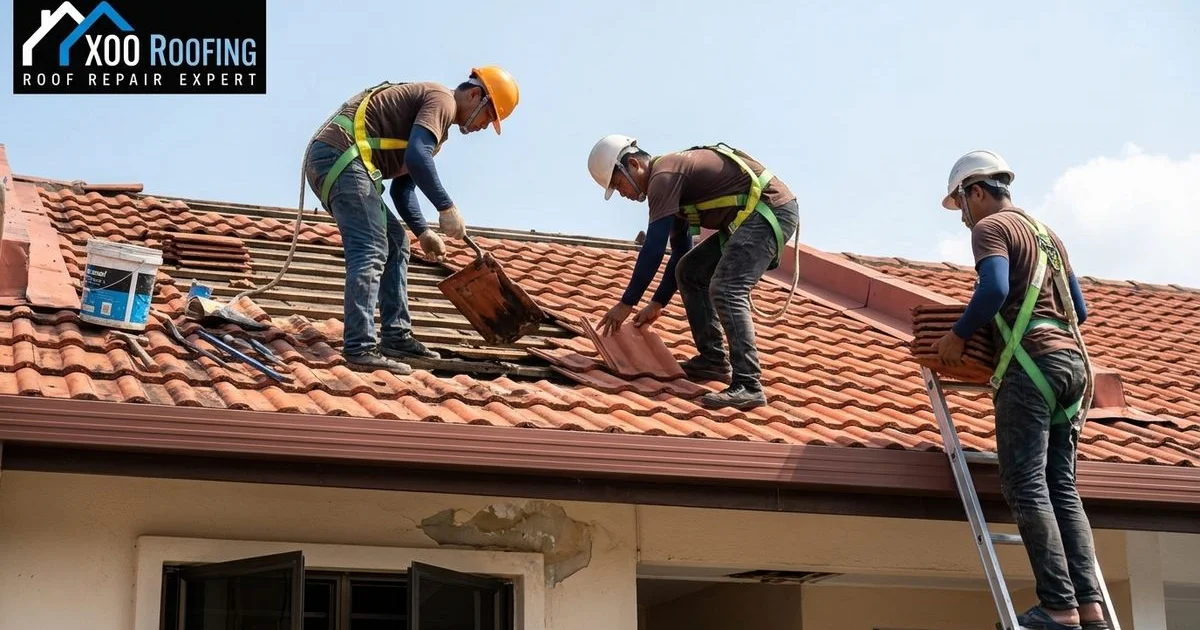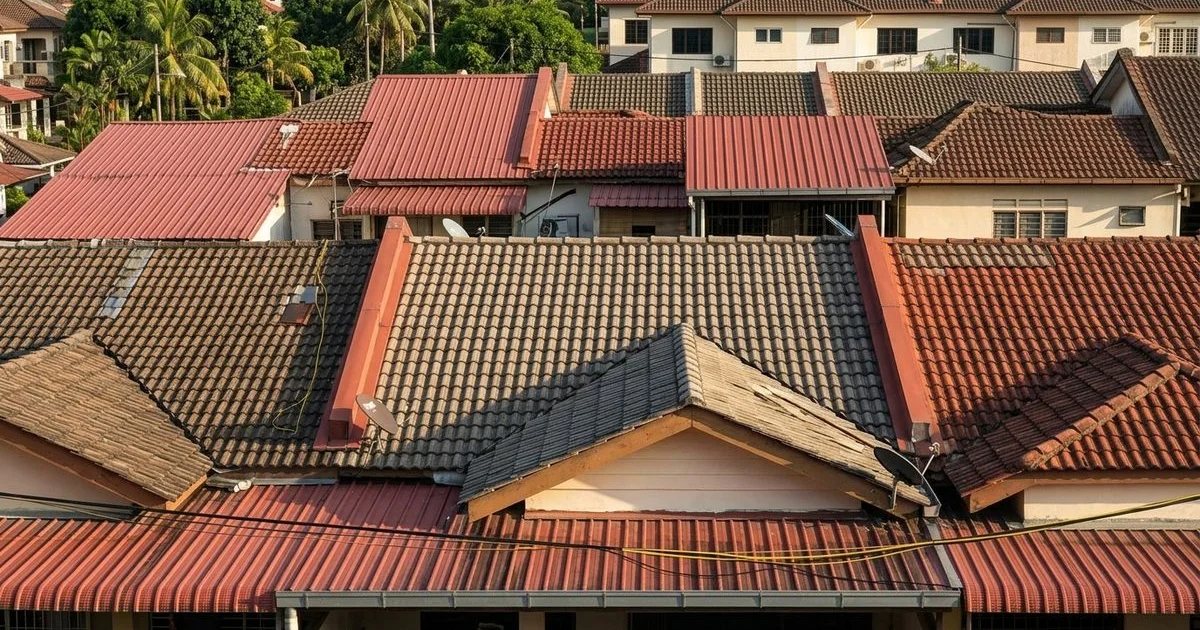
How Long Does Roof Installation Take?
Find out how long roof installation takes in Malaysia. From planning to completion, understand the timeline for different roof types and what factors cause delays.

Hong Seng
Founder & Licensed Roofing Contractor
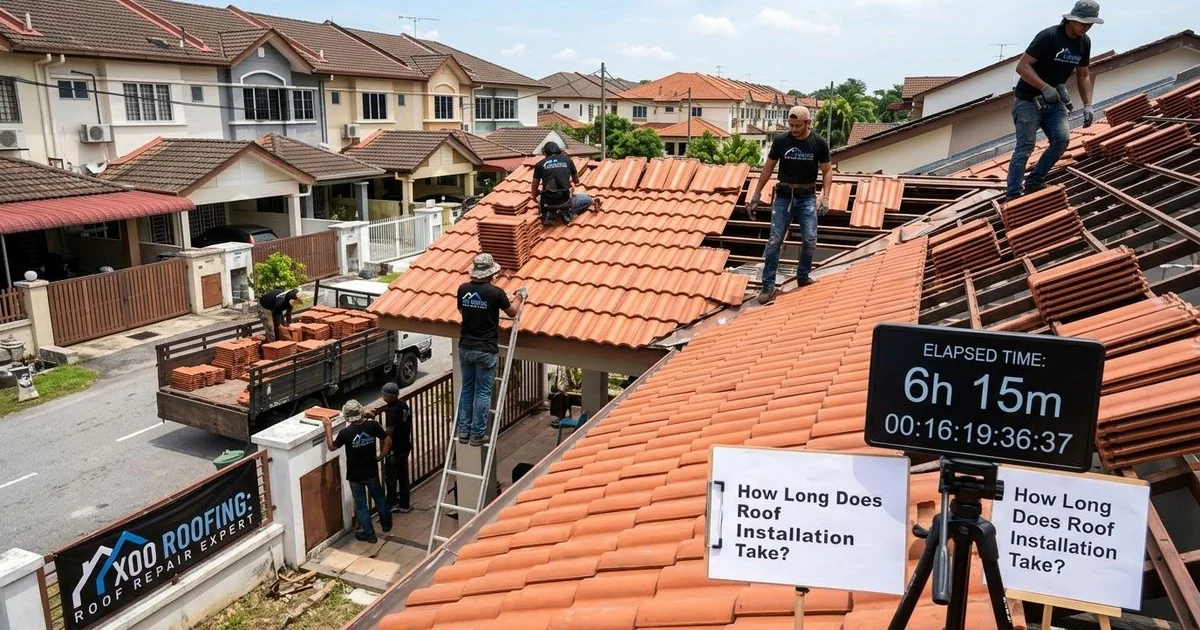
Scheduling a major renovation is always a balancing act, especially when your home is temporarily exposed to the elements. You are likely asking yourself: how long does roof installation take?
Since starting as a humble team of five roof specialists back in 2015, Xoo Roofing has grown into a leading provider in the Klang Valley, and we understand that pulling off a successful replacement requires precise timing. The typical residential roof installation in Malaysia takes between 3 and 10 working days. That specific duration depends heavily on your property size and the chosen roofing material.
Let us examine the exact daily schedules, material differences, and common local delays so you can plan your upcoming project with total confidence.
Typical Timelines by Roof Type
Property size directly dictates the installation schedule. We categorize projects based on standard Malaysian housing footprints to give you a realistic baseline.
Standard Terrace House (Single or Double Storey)
A standard terrace house with a straightforward roof design is the quickest type of residential property to upgrade. Most single-storey units in older neighbourhoods feature 600 to 1,000 square feet of living space. Double-storey terraces usually expand up to 1,600 square feet.
Our crews can typically complete these straightforward layouts within a single working week.
| Task | Estimated Time |
|---|---|
| Removal of old roof (if replacing) | 1 day |
| Structural inspection and timber repair | 0.5 - 1 day |
| Waterproof membrane installation | 0.5 day |
| Tile or sheet installation | 1 - 2 days |
| Flashing, ridge caps, and finishing | 0.5 - 1 day |
| Gutter installation or reconnection | 0.5 day |
| Cleanup | 0.5 day |
| Total Estimated Time | 3 - 5 working days |
Semi-Detached House
Semi-detached homes feature larger roof areas and more complex designs with multiple roof planes, valleys, and ridges. These properties usually boast built-up areas between 2,300 and 4,000 square feet.
We must allocate extra time to properly seal the shared party wall dividing your unit from your neighbour. This critical step prevents cross-property water ingress during heavy monsoons.
| Task | Estimated Time |
|---|---|
| Removal of old roof | 1 - 1.5 days |
| Structural work | 1 - 2 days |
| Waterproofing | 0.5 - 1 day |
| Tile installation | 2 - 3 days |
| Flashing and finishing | 1 day |
| Gutters and cleanup | 1 day |
| Total Estimated Time | 5 - 8 working days |
Bungalow
Bungalows naturally require more labour due to their massive footprint, which often exceeds 4,000 square feet. Multi-level roofs, dormer windows, and decorative features all add complexity and time.
Our teams prepare for custom cutting around intricate valleys and hips on these elaborate designs. You should expect a timeline of 7 to 10 working days, or slightly more for sprawling luxury properties.
Here are the primary factors that extend bungalow timelines:
- Multiple roof levels requiring separate scaffolding setups
- Custom dormer window flashing requirements
- Steep pitch angles slowing down tile placement
- Extensive gutter networks across varying elevations
Metal Roofing Projects
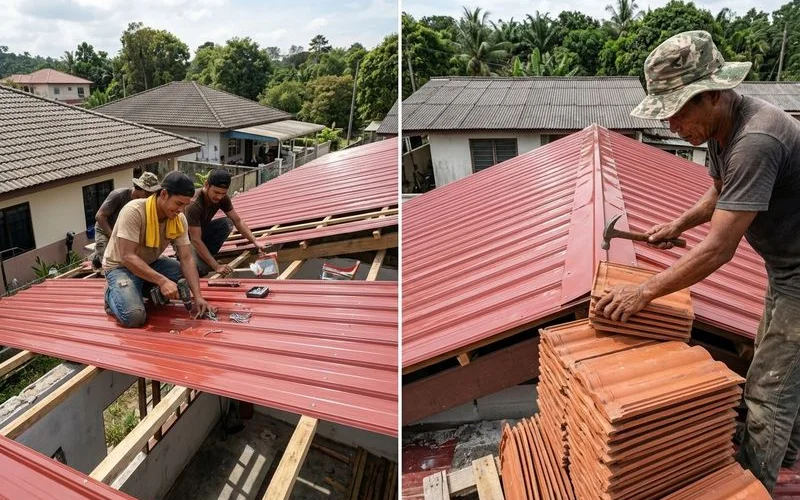
Metal roofing generally installs faster than tile because the large panels cover significantly more area per piece. We frequently use high-quality profiles like BlueScope Zacs for modern upgrades. A metal roof replacement on a standard terrace house frequently wraps up in just 2 to 3 working days.
Adding PE foam insulation and acoustic padding is strongly recommended in Malaysia to deaden the noise of heavy rain. This necessary acoustic upgrade adds another day or two to the timeline.
The Step-by-Step Process
Understanding each phase of roof installation clarifies why certain tasks require specific durations. The sequence remains largely identical whether you choose concrete tiles or metal sheets.
Phase 1: Preparation and Material Delivery (Day 0)
Before any work begins on your roof, the contractor delivers materials and sets up necessary access scaffolding. This preparation phase includes protecting your garden, driveway, and fragile items from falling debris.
We coordinate the arrival of Roll-On-Roll-Off (RORO) bins carefully. Placing these large waste bins on public roads requires a strict permit from local councils like MBPJ or DBKL. For replacement projects, a strategic removal sequence minimises the exact time your roof structure sits exposed.
Phase 2: Old Roof Removal (Day 1)
Replacing an existing roof begins with the careful removal of old roofing materials. Workers strip away the degraded exterior to expose the bare frame.
Our crew actively removes the following components during this dusty phase:
- Cracked ridge caps and mortar
- Old concrete or clay tiles
- Rusted metal valley flashing
- Torn waterproof membranes
Proper waste removal relies on pre-approved skip bins to cart away tonnes of old concrete and timber safely.
Phase 3: Structural Inspection and Repair (Day 1-2)
Removing the old cover exposes the underlying structure for a critical inspection. The contractor checks the trusses, purlins, and battens for signs of severe damage, wet rot, or termite activity.
We immediately replace or reinforce any compromised timber found during this audit. Upgrading to lightweight steel trusses is a popular choice to permanently eliminate future termite threats.
Skipping this reinforcement and installing heavy new tiles on a weakened frame invites future collapses.
Phase 4: Battens and Waterproofing (Day 2-3)
Workers fix new battens to the trusses at the precise spacing required for your chosen material. Modern installations mandate a high-quality waterproof underlay before any tiling begins.
Our preferred method involves applying radiant barrier sarking, such as BMI Monier Radenshield. This dual-purpose layer provides secondary protection against water ingress while actively reflecting tropical heat away from your ceiling.
Pro Tip: Never let a contractor skip the radiant barrier in Malaysia. It drastically reduces your upper-floor ambient temperature and serves as a critical fail-safe against minor tile leaks during monsoon storms.
Phase 5: Roofing Material Installation (Day 3-5)
The actual installation of your new roof tiles, sheets, or panels represents the core phase of the project. Installation progresses from the eaves upward, ensuring each row overlaps the one below to create a highly watertight surface.
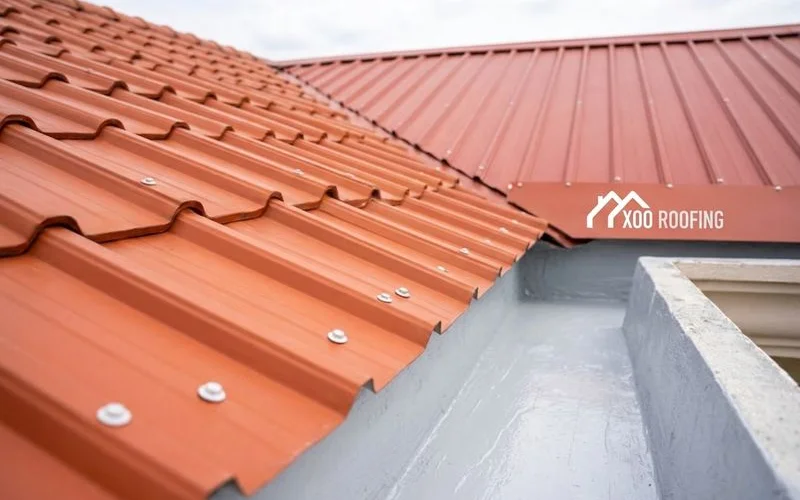
Material choice directly dictates the speed of this phase. Large metal panels lock together rapidly across wide spans. Individual concrete tiles demand more manual lifting and precise alignment.
Complex roof shapes with numerous valleys slow the pace because every single junction requires careful cutting.
Phase 6: Flashing and Finishing (Day 5-6)
Workers install metal flashing at all critical junctions to direct water safely into the gutters. Ridge caps are then fitted securely along the highest peaks of the roof.
We highly recommend using a modern dry-fix tape system instead of traditional cement mortar. Cement cracks under the intense Malaysian sun, while flexible dry-fix tapes expand and contract to maintain a perfect seal.
Key finishing areas include:
- Sealing vent pipes and plumbing stacks
- Waterproofing skylight perimeters
- Securing valley gutters
- Capping the main ridge lines
Phase 7: Gutter Installation (Day 6-7)
New gutters and downpipes are installed or your existing ones get reconnected. Properly sized and positioned gutters are strictly essential for managing Malaysia’s heavy rainfall.
Our team conducts water tests on the newly hung UPVC or Colorbond metal gutters to ensure optimal drainage angles. This final check prevents pooling water near your foundation.
Phase 8: Inspection and Cleanup (Final Day)
The contractor performs a final quality audit to check for loose tiles or incomplete sealing. The crew cleans the surrounding work area, clears the final debris, and dismantles the scaffolding safely.
You should always conduct your own visual walkthrough to address any concerns before signing off on the job. We recommend checking these specific items:
- Confirm all gutters are completely clear of broken tiles
- Inspect the ground and driveway for stray nails or screws
- Verify all ridge caps sit perfectly straight along the roofline
Factors That Can Cause Delays
Even the most carefully planned schedules encounter unexpected roadblocks. Knowing these common disruptions helps you manage expectations realistically.
Weather Disruptions
Rain is the single biggest cause of delays in Malaysian exterior renovations. Work cannot proceed safely on slippery, pitched surfaces during a downpour.
Our local climate features distinct wet seasons that drastically shrink available working windows. Data from the Malaysian Meteorological Department confirms that October through December brings the heaviest rainfall to the Klang Valley.
Scheduling your installation between January and March offers a slightly better chance of uninterrupted dry days.
Strict Working Hour Regulations
Local council regulations strictly govern when contractors can generate noise in residential areas. Authorities like DBKL and MBPJ typically restrict loud renovation work, such as drilling or hammering, to specific times.
Standard permitted working hours in the Klang Valley usually follow this schedule:
| Day | Permitted Hours |
|---|---|
| Monday to Friday | 9:00 AM to 5:00 PM |
| Saturday | 9:00 AM to 1:00 PM |
| Sunday & Public Holidays | No Noisy Work Allowed |
We strictly adhere to these legal boundaries, which means a fast three-day job actually spans a full calendar week if it begins on a Thursday afternoon.
Structural Surprises
Sometimes the underlying roof structure hides damage that is worse than initially expected. Over thousands of local inspections, our team frequently discovers concealed termite colonies or hidden wet rot that demand immediate reinforcement.
These critical structural corrections naturally pause the finishing work until the frame is fully secured.
Material and Permit Approvals
Selecting a specialized tile profile or a rare colour glaze might trigger a wait for factory delivery. Discussing material stock levels during the planning phase prevents these specific supply chain delays.
Significant renovation work requires formal approval from your local council or strata management body. You must secure these essential documents early to prevent severe penalties.
Operating without a valid permit risks:
- Immediate stop-work orders from council enforcement teams
- Heavy compound fines issued to the homeowner
- Forced dismantling of unapproved structural additions
How to Minimise Disruption
A clear strategy keeps your household running smoothly while the roofers work above.
- Plan ahead: Discuss the daily schedule with your contractor before the scaffolding arrives. Knowing exactly which days involve the heaviest demolition helps you plan off-site activities for your family.
- Protect your belongings: Remove or securely cover items stored in your attic and the exterior perimeter of your home. Dust and fine debris inevitably fall through exposed ceiling cavities during structural timber repairs.
- Communicate with your neighbours: Roof work generates noise and sometimes requires temporary access to adjacent driveways. A polite conversation with your neighbours prevents frustrating disputes over parking or dust.
- Prepare for utility pauses: Certain phases may require temporary disconnection of your main water or electricity lines. Coordinate this with the site supervisor so your daily routine remains unaffected.
So, How Long Does Roof Installation Take for Your Home?
When neighbours ask how long does roof installation take, you now know the timeline depends heavily on proper planning and material choices. Xoo Roofing provides detailed project timelines as part of every formal quotation.
We prioritize setting realistic expectations and communicating proactively if weather shifts during the project. If you are planning a roof installation in Petaling Jaya or anywhere in the Klang Valley, contact us today. Let our experienced team map out a clear, honest timeline for your home.
Hong Seng
Founder & Licensed Roofing Contractor
Founder of Xoo Roofing with 10+ years of roofing expertise in Klang Valley.